
31000 Series Proximity Probe Housing Assembly Guide
Product Introduction
The Bently Nevada 31000-28-05-00-028-01-02 belongs to the 31000 series probe housing family. This assembly protects 3300 XL 8mm proximity probes in demanding industrial settings. The part number breaks down as follows: "28" specifies the 3300 XL 8mm probe with multiple approvals. "05" indicates a 0.5-meter cable length. "00" means no standoff adapter. "028" denotes a 2.8-inch probe penetration depth. "01" specifies one 3/4-14 NPT fitting plus two plugs. "02" indicates the 3/4-14 NPT mounting thread option.
This housing operates across a wide temperature range from -51°C to +105°C. It withstands 7 Joule impact at ambient temperatures. The main body uses conductive PPS thermoplastic material. Internal components feature stainless steel construction. Neoprene seals provide chemical resistance against oils and mild acids.
Core Value
This housing assembly delivers critical protection for vibration monitoring sensors. Its primary role is safeguarding 3300 XL 8mm probes in hazardous locations. You can use it on offshore drilling rigs and in chemical plants. It also works well in mining operations and wastewater treatment facilities. Furthermore, the 31000-28-05-00-028-01-02 provides explosion-proof certification for Zone 1 and Zone 2 areas. It also offers IP66 environmental sealing against dust and water ingress. The conductive thermoplastic prevents static electricity buildup. Therefore, this housing ensures reliable sensor operation in corrosive atmospheres.
Technical Insights
The 31000 series housing uses a reverse-mount probe configuration. Specifically, the probe sleeve offers an adjustment range of ±0.5 inches. This allows fine-tuning of the sensor gap relative to the target shaft. The housing meets API 670 standards for machinery protection systems. Moreover, it complies with ATEX, IECEx, and CSA Type 4X certifications.
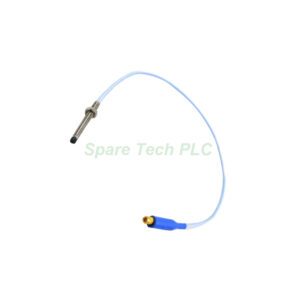
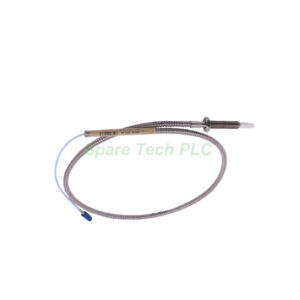
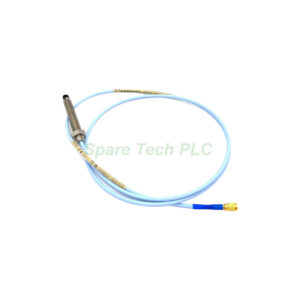
The assembly includes the physical housing shell and the 3300 XL 8mm probe. It also contains the 0.5-meter cable and the specified fittings. However, the Proximitor sensor is a separate component. You must purchase it separately to complete the transducer loop. The system provides interchangeability of components without individual matching or bench calibration.
Installation & Maintenance
Proper installation ensures optimal housing performance. First, mount the housing using the 3/4-14 NPT threads. Apply thread sealant on all NPT connections. Tighten the retaining nut to 29.4 N·m (260 in-lb) for proper sealing. Secondly, ground the housing to the machine frame using the grounding screw. This prevents electrical interference with the probe signal. Thirdly, verify the probe penetration depth before locking the sleeve. Adjust the sleeve until you achieve the correct air gap.
Furthermore, route the cable with a minimum bend radius of 50.8 mm. Secure the cable using appropriate clamps to prevent vibration damage. For maintenance, inspect the housing seals periodically. Replace any cracked or hardened neoprene seals immediately. Also, clean the housing interior during scheduled shutdowns. Remove any accumulated dirt or moisture. Always verify that the fitting plugs remain tight. Loose fittings compromise the explosion-proof integrity of the 31000-28-05-00-028-01-02.

Buyer's Guide FAQ
1. What sensors work with the Bently Nevada 31000-28-05-00-028-01-02?
This housing accommodates 3300 XL 8mm proximity probes exclusively. It does not support other sensor types or sizes.
2. Is the Proximitor included with this housing assembly?
No, the Proximitor sensor is a separate purchase. This housing contains only the probe, cable, and mounting hardware.
3. What certifications does this housing carry?
The 31000-28-05-00-028-01-02 holds ATEX, IECEx, CSA Type 4X, and API 670 certifications for hazardous area use.
4. Can I adjust the probe gap after installation?
Yes, you can adjust the gap by loosening the sleeve locking nut. The sleeve offers ±0.5 inches of adjustment range.
5. What is the maximum operating temperature for this housing?
The housing operates continuously from -51°C to +105°C. Exceeding this range may damage the internal probe components.