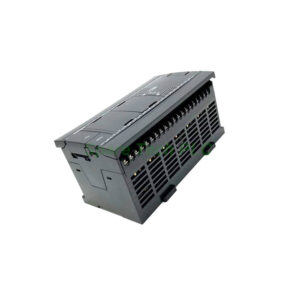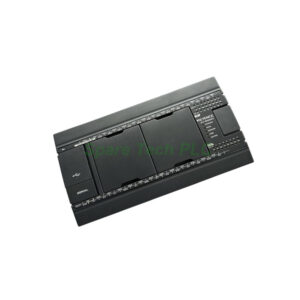

3RW4455-6BC44 Equivalent | Soft Starter Installation & Maintenance Guide
Product Introduction
The Siemens 3RW4455-6BC44 belongs to the proven SIRIUS 3RW44 family. This soft starter operates with a control supply voltage of 110V to 230V AC/DC. Moreover, the device manages main currents up to 135 A at 40°C ambient temperature. It supports an operating voltage range of 200V to 480V AC. Engineers frequently select the 3RW4455-6BC44 for heavy-duty conveyors, large fans, and screw compressors. Additionally, this model integrates internal bypass contacts. These contacts eliminate heat generation during continuous running. Therefore, the 3RW4455-6BC44 improves panel efficiency significantly.
Core Value
This soft starter delivers four major benefits. Firstly, it limits inrush current to below 400% of motor full load current. Lower peaks protect upstream breakers and transformers. Secondly, the 3RW4455-6BC44 reduces mechanical shock during start and stop cycles. This feature extends bearing and coupling life. Meanwhile, the device offers adjustable torque control from 30% to 80%. Operators can also select current limiting mode. Furthermore, integrated motor overload protection replaces external thermal relays. Specifically, the 3RW4455-6BC44 handles high-inertia loads like centrifuges and hammer mills. Consequently, this model reduces panel space and wiring complexity.
Technical Insights
The 3RW4455-6BC44 uses thyristor-based soft starting technology. It ramps motor voltage smoothly from 10% to 100% of line voltage. Engineers can program five different starting modes. For instance, torque control suits piston pumps with fluctuating loads. Likewise, current limiting mode works well for long cable runs exceeding 100 meters. The device also includes integrated motor braking capability. This optional function stops loads faster without mechanical brake wear. Additionally, the 3RW4455-6BC44 features a built-in Profibus DP interface. This interface provides direct PLC communication for remote monitoring. You can read actual motor current, heatsink temperature, and fault status. Moreover, the device logs the last ten fault events with time stamps. These logs speed up root cause analysis after unexpected trips.

Installation & Maintenance
Follow these steps for correct installation. Firstly, mount the 3RW4455-6BC44 vertically on a non-flammable metal backplate. Maintain at least 120 mm free space above and below for proper airflow. Secondly, use copper cables rated for 90°C insulation. Tighten main terminal screws to 15 Nm torque. Meanwhile, connect the control supply to terminals A1 and A2. For DC operation, observe correct polarity. For maintenance, perform annual thermal imaging scans. Loose terminals show temperature rises above 20°C ambient. Besides that, clean dust from the heatsink every three months in dirty environments. Use a soft brush and industrial vacuum. Importantly, never open the sealed device enclosure. The 3RW4455-6BC44 contains no user-serviceable internal parts. Replace the complete unit upon failure.
Buyer’s Guide FAQ
1. What is the maximum current rating of the Siemens 3RW4455-6BC44?
The 3RW4455-6BC44 handles 135 A continuous current at 40°C. For 50°C ambient temperature, derate the current to 122 A. Check the derating curve in the manual.
2. Can the 3RW4455-6BC44 replace a variable frequency drive?
No. The 3RW4455-6BC44 controls only motor start and stop acceleration. It cannot change motor speed. Use a VFD for variable speed applications.
3. Does this soft starter require external bypass contactors?
No. The 3RW4455-6BC44 includes internal mechanical bypass contacts. These contacts close after the starting ramp completes. They reduce heat losses to near zero.
4. How do I reset the 3RW4455-6BC44 after a fault trip?
Press the front panel reset button for one second. Alternatively, use a remote reset signal via terminal X1:2. Allow a five-second cooling period before resetting.
5. What communication protocols work with the 3RW4455-6BC44?
This model supports Profibus DP via an optional communication module. You can also use analog I/O for simple start/stop commands and current feedback. For Profinet, select a different 3RW44 sub-variant.