
140CRA21220C Remote I/O Drop Adapter Installation & Setup Guide
Product Introduction
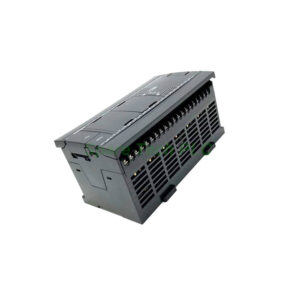
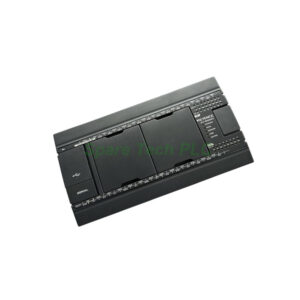
Schneider Electric designed the 140CRA21220C for Quantum distributed I/O architectures. This adapter module acts as the head of a remote drop. Specifically, it connects a Quantum local rack to up to 31 remote drops over fiber optic cable. The module supports both copper and fiber media. You can run distances up to 2 km using multi-mode fiber. Consequently, the 140CRA21220C enables large-scale process automation. Typical applications include mining conveyors, pipeline monitoring, and assembly lines. The module consumes 350 mA from the 5V backplane. Moreover, it includes two RJ45 ports for daisy-chaining drops. A dedicated fiber port accepts ST-style connectors.
Core Value
Firstly, the 140CRA21220C reduces cabling costs significantly. You replace hundreds of control wires with a single fiber loop. Secondly, it improves system scan times. Remote I/O updates occur within a single Quantum scan cycle. Furthermore, the module supports automatic configuration. You simply set the drop number via rotary switches. The system then maps all I/O automatically. Specifically, this feature saves hours of manual configuration. Additionally, the 140CRA21220C offers diagnostics via front-panel LEDs. You can see link status, drop activity, and fiber health immediately. Therefore, troubleshooting remote drops becomes much faster. Lastly, the module works with existing Quantum I/O. No need to replace your installed base.
Technical Insights
The 140CRA21220C uses a proprietary fiber protocol. Baud rate runs at 1.5 Mbps. Fiber optic cable must be 62.5/125 µm multi-mode type. Maximum segment length equals 2 km. For copper wiring, use shielded twisted pair with a 120-ohm impedance. Maximum copper distance is 600 meters. The module includes two rotary switches. One sets the drop address from 0 to 31. The second switch selects baud rate and media type. Moreover, the 140CRA21220C supports redundant fiber paths. You can build a ring topology for increased reliability. If a fiber break occurs, the ring heals automatically. Recovery time stays under 50 ms. The module also provides electrical isolation of 500V DC. This protection separates the backplane from field cables. Front-panel LEDs indicate RUN, I/O ACTIVE, and FIBER STATUS. Specifically, a green FIBER OK LED confirms proper optical power.

Installation & Maintenance
Follow these steps to install the 140CRA21220C. First, power down the remote rack completely. Second, insert the module into the leftmost slot of the remote chassis. Third, secure the retaining screws by hand. Fourth, set the drop address using the upper rotary switch. For fiber installation, clean each connector with a dry lint-free cloth. Insert the ST connectors until they click firmly. For copper wiring, terminate each pair at the RJ45 ports. Use TIA-568B pinout standard. Then power up the local rack first. Wait 10 seconds. Finally power up the remote rack. During maintenance, inspect fiber connectors annually. Clean them using approved fiber cleaning tools. Also verify the drop status from the local processor. Replace the 140CRA21220C if you see persistent ERR or NO LINK conditions. Always keep a spare adapter module on hand.
Buyer's Guide FAQ
1. What is the exact function of 140CRA21220C?
The 140CRA21220C works as a remote I/O adapter head. It connects a Quantum local rack to remote I/O drops.
2. Can I mix fiber and copper on the same 140CRA21220C?
No, you select either fiber or copper via the mode switch. Both media types cannot operate simultaneously on one module.
3. How many remote drops can 140CRA21220C support?
A single Quantum local rack supports up to 31 remote drops. Each drop requires its own 140CRA21220C adapter.
4. What software configures the 140CRA21220C?
You use Unity Pro or Concept software. The 140CRA21220C requires no manual I/O mapping. Configuration remains automatic.
5. Does the 140CRA21220C support hot swapping?
Yes, you can replace the module while the rack remains powered. However, always verify drop address settings before insertion.