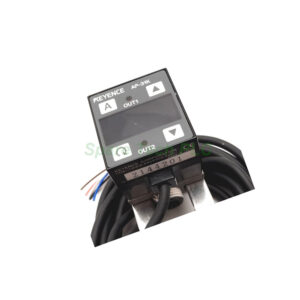
Product Introduction
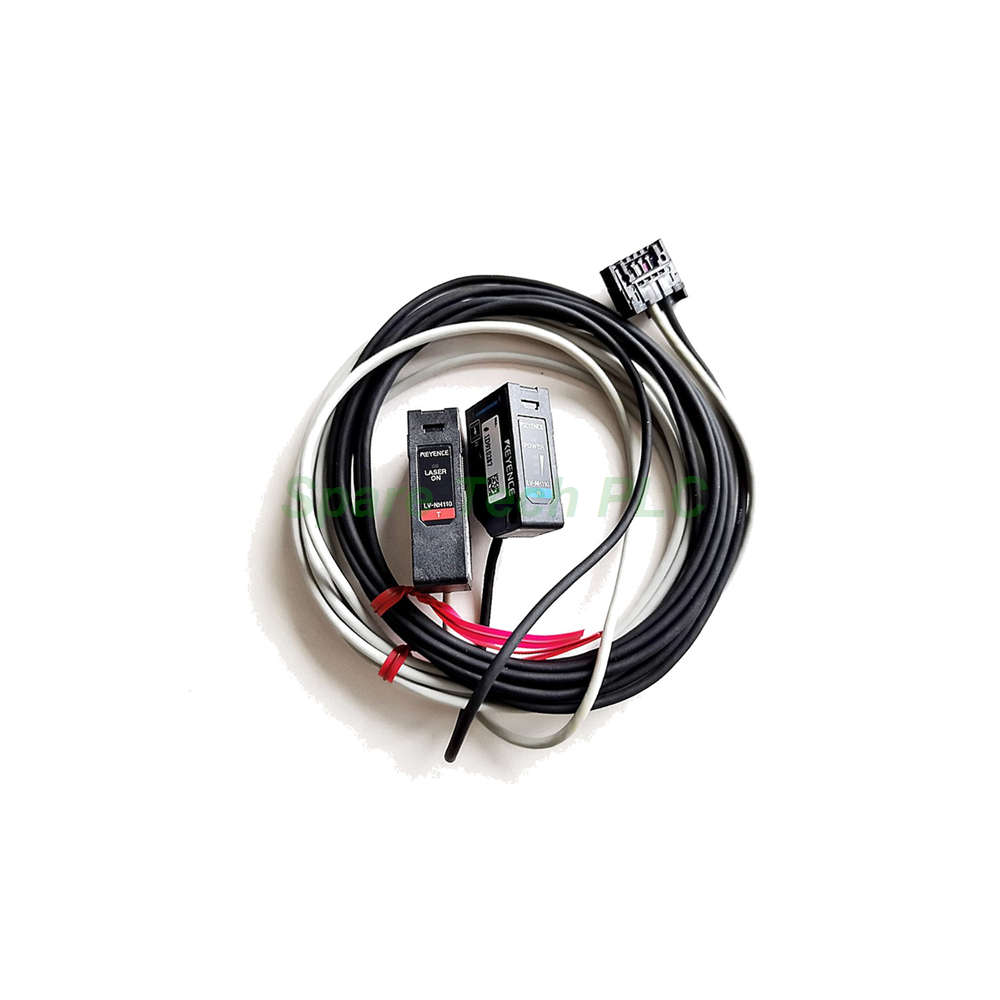
The Keyence LV-NH110 belongs to the LV-N series of digital laser sensors. Specifically, this unit serves as a thrubeam area-type sensor head with a 10 mm detecting area. Its emitter and receiver sit opposite each other, so the beam covers a wide band rather than a single point. Additionally, the wide detecting area tolerates target position shifts on fast production lines. Therefore, technicians can detect small parts, wires, and edges without precise mechanical alignment. The head contains no output circuitry. Instead, it relies on a dedicated cable connection to an LV-N series amplifier for power and signal processing.
Technical Specifications
The optical performance of the LV-NH110 centers on a 660 nm visible red semiconductor laser. This light source meets Class 1 laser safety requirements under FDA CDRH Part 1040.10 and IEC 60825-1 standards. Consequently, the sensor operates safely in typical industrial environments without additional protective enclosures.
Detecting Distance and Area
The LV-NH110 provides a detecting distance of 2000 mm while maintaining a 10 mm detecting area. This combination suits long-span installations such as wide conveyor lines and large assembly stations. Meanwhile, the area-type beam covers a band across the target path. As a result, the sensor detects objects that pass anywhere within that band. Users should keep the emitter and receiver parallel to preserve beam uniformity across the full distance.
Amplifier Dependency
This sensor head contains no built-in communication ports or output transistors. Instead, all signal processing occurs within the LV-N series amplifier. Therefore, the LV-NH110 requires a compatible amplifier unit (such as LV-N11N or LV-N12N) to function. The amplifier supplies power and converts the optical signal into a usable NPN or PNP output.
Mechanical and Environmental Parameters
The LV-NH110 housing uses glass-reinforced plastic for the main case. This material provides dimensional stability across the operating temperature range of -10 to +55 °C (no freezing). Moreover, the sensor tolerates relative humidity from 35 to 85 % RH without condensation.
Installation Guide
Mounting the Sensor Head
First, secure the emitter and receiver using the included mounting brackets. The tightening torque for the bracket screws should not exceed 0.3 N·m. Over-tightening may damage the plastic housing. Next, position both units so their optical axes face each other squarely. The 10 mm detecting area tolerates some vertical offset, but the emitter and receiver must remain parallel.
Connecting to the Amplifier
Open the dust cover on the amplifier and lower the hold lock lever. Then, insert the sensor head connector fully into the amplifier port. Finally, raise the hook and secure the lock lever before closing the dust cover. After connection, verify that the amplifier recognizes the LV-NH110 head. If the display shows an unexpected model code, initialize the amplifier settings and reconnect the head.
Alignment and Calibration
Power on the amplifier and confirm that light reaches the receiver. Align the emitter so the beam band covers the full target path. Meanwhile, observe the amplifier's incident light intensity indicator. Adjust both units until the intensity reaches its maximum. For small targets, consider switching to FINE or HSP mode to improve response speed.
Packaging List
FAQ
Q1: Does the LV-NH110 work without an amplifier?
A: No. The LV-NH110 is a sensor head only. It requires an LV-N series amplifier unit for power and signal output. Without an amplifier, the head cannot operate or produce a detection signal.
Q2: What does the 10 mm detecting area mean?
A: The LV-NH110 projects a beam band rather than a single spot. This 10 mm band covers the target path, so objects pass through any part of it and still trigger detection.
Q3: What is the maximum detecting distance of this model?
A: The LV-NH110 supports a detecting distance of 2000 mm while maintaining its 10 mm detecting area. Users should keep the emitter and receiver parallel across that span.
Q4: Can I use the LV-NH110 for small part detection?
A: Yes. The area-type beam detects small parts, wires, and edges that pass through the band. For fast-moving small targets, switching to FINE or HSP mode improves response speed and repeatability.
Q5: How should I clean the sensor lens?
A: Gently wipe the lens covers with a soft, dry cloth. Avoid solvents or abrasive materials. Since the case is plastic, harsh chemicals may cause clouding and reduce optical performance.