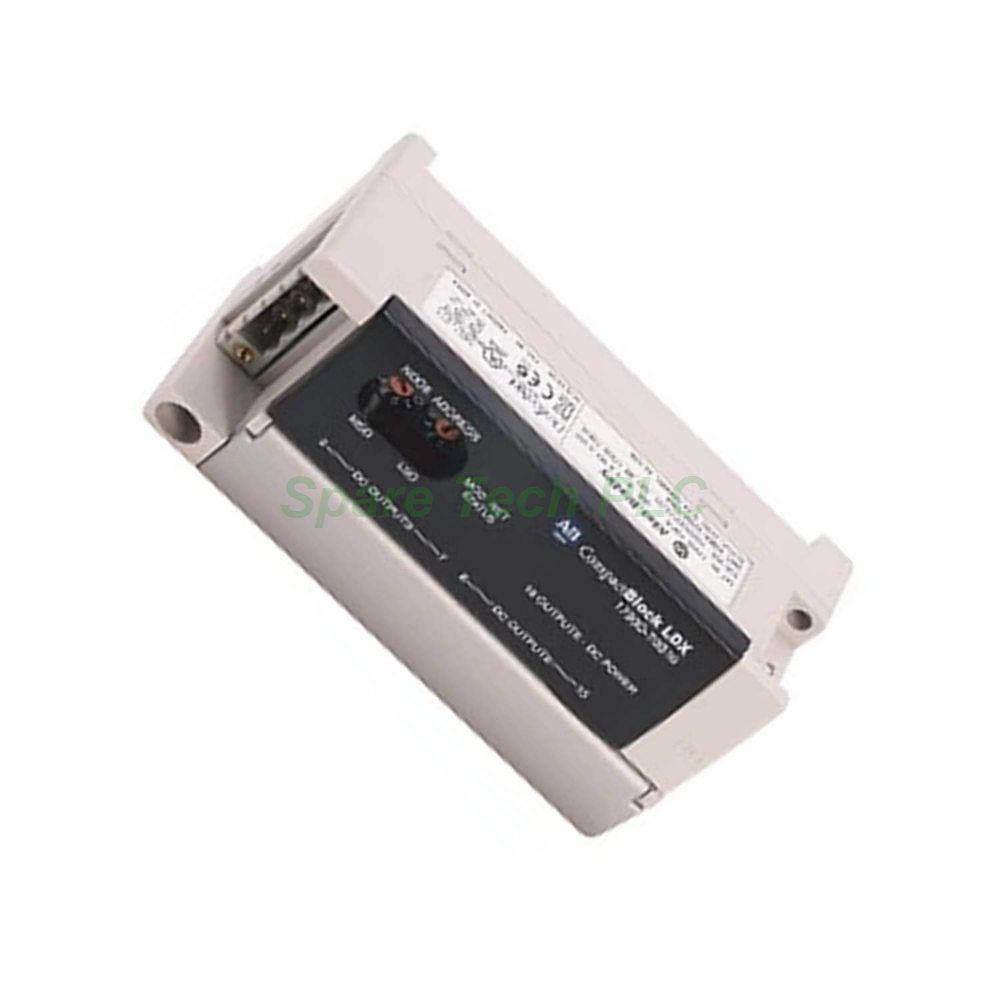
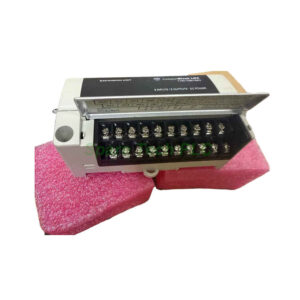
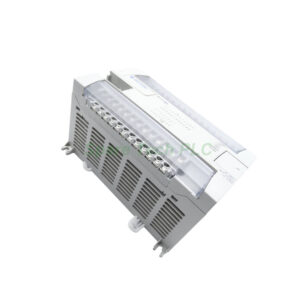
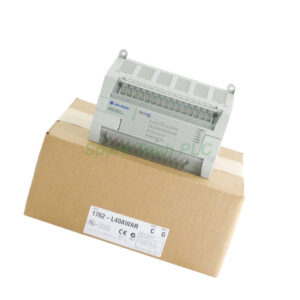
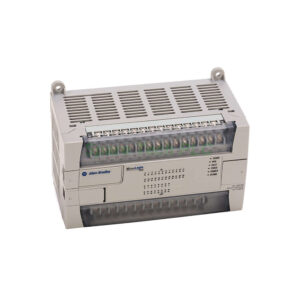
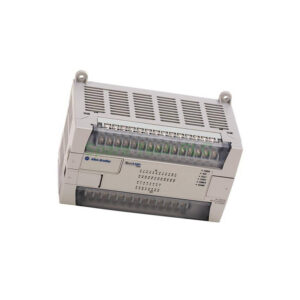
Allen-Bradley 1790-0B16X 24V DC Sourcing Output Module
Product Introduction
The 1790-0B16X module belongs to the CompactBlock LDX series. It provides 16 sourcing outputs for distributed I/O systems. Each channel supports up to 0.5A of continuous current. Besides that, the module ensures fast response with an off-to-on delay of only 0.5ms. You can rely on its photocoupler isolation for safety. Specifically, the isolation voltage reaches 1250V ac rms. Therefore, this I/O module suits industrial environments where noise immunity matters.
Technical Specifications
Output Characteristics
The 1790-0B16X delivers 16 nonisolated sourcing output points. The on-state voltage ranges from 10V dc minimum to 28.8V dc maximum, with 24V dc nominal. Meanwhile, the on-state voltage drop stays below 0.5V dc max. Each channel requires a minimum on-state current of 1 mA. The off-state leakage current does not exceed 0.5 mA max.
For signal timing, the off-to-on delay is 0.5 ms max, while the on-to-off delay reaches 1.0 ms max. Sixteen green status indicators help you monitor every channel. Additionally, each output supports 0.5A max, and the common side handles up to 4.0A max. The common type uses 8 points per common for the 1790-0B16X.
General Electrical Data
Field power supply voltage nominally sits at 24V dc. Its operating range extends from 10V dc to 28.8V dc. Power dissipation for the base module reaches 1.2W max at 28.8V dc. Moreover, each point dissipates 6 mA at 28.8V dc. The DeviceNet power supply also requires 24V dc nominal, with a range of 11…28.8V dc.
Isolation and Connectivity
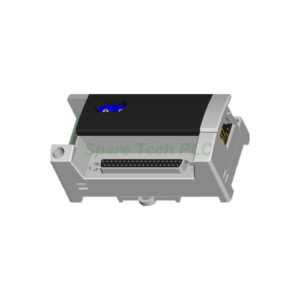
Isolation between I/O and logic uses photocoupler technology. The isolation voltage is rated at 1250V ac rms. For wiring, the module employs a 37-pin D-shell connector. This connection type simplifies field wiring and reduces installation time.
Mechanical and Environmental Parameters
The 1790-0B16X carries an IP20 protection rating. It is designed for use inside control cabinets. Operating temperature typically ranges from 0°C to 55°C. Storage temperature spans -25°C to 85°C. Relative humidity should stay between 5% and 95% non-condensing. Vibration resistance meets IEC 60068-2-6 standards. Shock resistance complies with IEC 60068-2-27.
Installation Guide
First, ensure that the field power supply is turned off before wiring. Next, mount the expansion block onto a DIN rail or directly to a panel. Then, connect the 37-pin D-shell cable to the 1790-0B16X. After that, wire the 24V dc field power to the designated terminals. Finally, connect the DeviceNet network cable to the base module.
Furthermore, verify that each output load does not exceed 0.5A. Also check that the total current per common stays below 4.0A. Use copper conductors only, with a wire gauge of 0.5 to 1.5 mm². Tighten all screws to the torque specified in the user manual. Once wiring is complete, apply power and observe the green status LEDs.
Packaging List
1790-0B16X module (1 unit)
37-pin D-shell connector (1 piece, pre-attached)
Installation instructions sheet
DIN rail mounting clips (2 pieces)
Note: No certificates or warranty documents are included.
Shipping
We ship all orders via FedEx, UPS, or DHL. Delivery typically takes 3-7 business days worldwide.
Frequently Asked Questions (FAQ)
1. Can the 1790-0B16X drive inductive loads directly?
Yes, but we recommend adding a flyback diode across each inductive load. This practice protects the output transistors from voltage spikes.
2. What happens if I exceed 0.5A per output on the 1790-0B16X?
The module may overheat and trigger thermal shutdown. Prolonged overload can permanently damage the output channel.
3. Do I need an external power supply for the 1790-0B16X?
Yes. You must provide a separate 24V dc field power supply. The module does not draw field power from the DeviceNet cable.
4. Is the 1790-0B16X compatible with older 1790 systems?
Absolutely. It works as both a base and expansion block within the same 1790 CompactBlock LDX family.
5. How do I know if an output is active on the 1790-0B16X?
Each of the 16 channels has a green LED indicator. The LED turns on when the output is sourcing current.