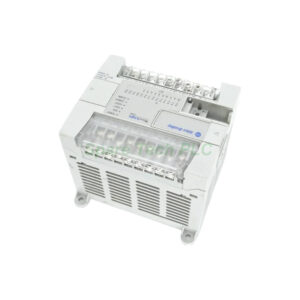
Product Introduction
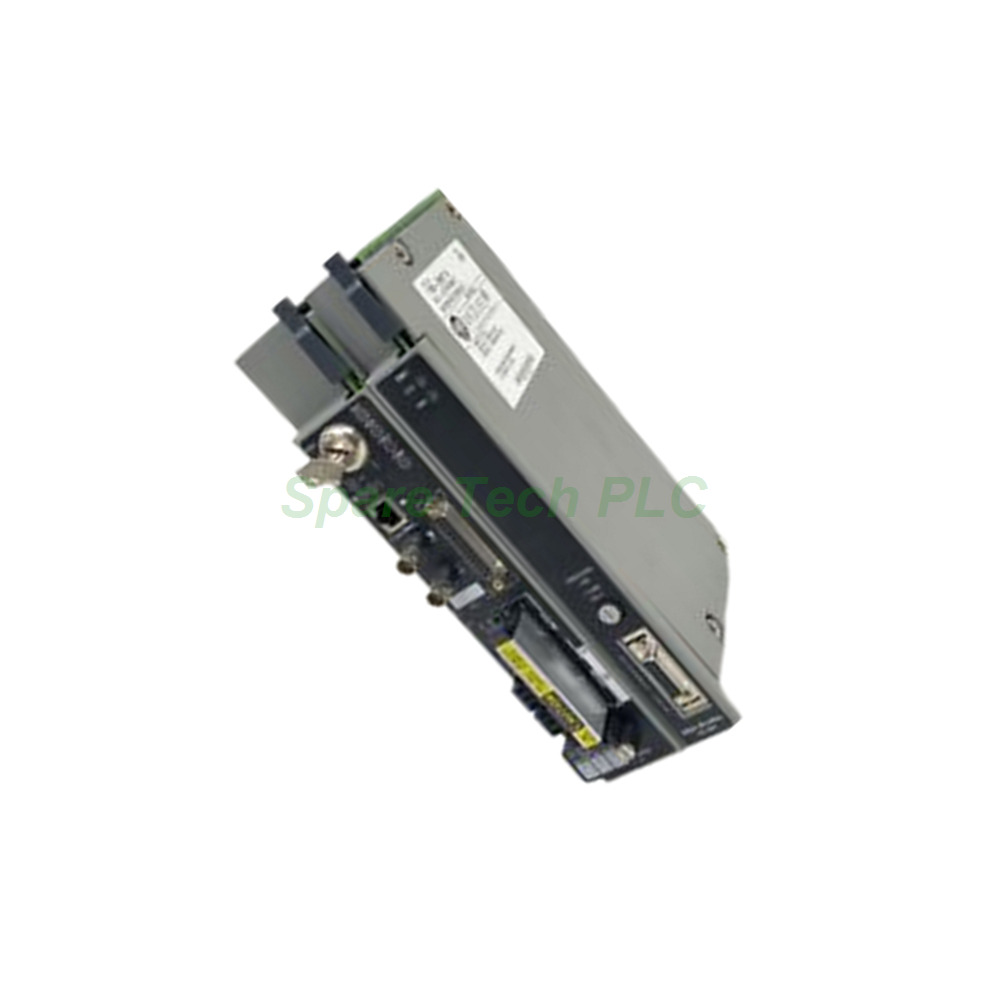
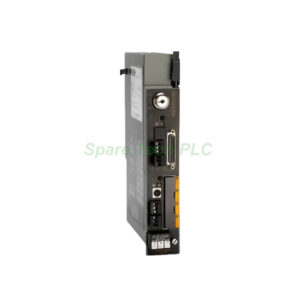
The 1785‑L80C15 is a high‑capacity ControlNet PLC‑5/80C programmable controller from Allen‑Bradley. It is designed for large and complex automation systems, offering a rich set of embedded communication options including serial, Data Highway Plus (DH+), Remote I/O (RIO), DH via 1785‑KA, and dual ControlNet ports.
With a maximum user memory of 100 Kilowords and support for up to 3072 total I/O points (or 3072 inputs plus 3072 outputs in complementary mode), the 1785‑L80C15 provides ample resources for demanding applications. Its battery‑backed static RAM ensures program integrity during power interruptions, while optional EEPROM cartridges like the 1785‑ME32, ‑ME64, or ‑M100 offer non‑volatile backup without continuous power.
This module installs in the left‑most slot of compatible 1771 chassis (including ‑A1B, ‑A2B, ‑A3B, ‑A3B1, and ‑A4B). It supports three hardware addressing modes — 2‑slot, 1‑slot, and ½‑slot — giving you flexibility to mix 8‑point, 16‑point, and 32‑point I/O modules according to your system layout.
Technical Specifications
The 1785‑L80C15 delivers strong processing performance with a program scan time of 0.5 ms per K word for bit logic and 2 ms per K word for typical instructions. Its internal clock/calendar maintains accurate timekeeping for event logging and scheduled operations.
For communication, this controller offers:
One RS‑232‑C / RS‑422‑A / RS‑423‑A serial port supporting the DF1 protocol.
One Data Highway Plus (DH+) port for peer‑to‑peer networking.
One Remote I/O (RIO) port for distributed I/O racks.
DH support using the 1785‑KA adapter.
Two ControlNet ports (BNC type) for redundant media connection, running at 5 Mbps.
The DH+ and RIO networks support selectable baud rates: 57.6 Kbps, 115.2 Kbps, or 230.4 Kbps. The ControlNet I/O scan averages 0.5 ms per rack, while universal remote I/O scan times range from 10 ms (at 57.6 Kbps) down to 3 ms (at 230.4 Kbps).
The 1785‑L80C15 can manage up to 125 I/O chassis in total, with 60 remote chassis per universal remote I/O link. The ControlNet network accommodates high‑speed data exchange over coaxial RG6 cables, making it suitable for real‑time control across large facilities.
Additionally, this controller supports redundancy when paired with the appropriate hot‑backup cartridge, enhancing system availability for critical processes.
Mechanical & Environmental Ratings
Built for industrial environments, the 1785‑L80C15 operates reliably under the following conditions:
Operating temperature: 0 to 60 °C (32 to 140 °F).
Storage temperature: ‑40 to 85 °C (‑40 to 185 °F).
Relative humidity: 5‑95 % (non‑condensing).
Operating shock: 30 g (3 pulses, 11 ms).
Non‑operating shock: 50 g (3 pulses, 11 ms).
ESD immunity: 4 kV contact discharges.
The module draws power from the 1771 backplane and has a maximum heat dissipation suitable for standard panel installations. It carries CE, UL, CSA, and C‑TICK certifications, confirming its compliance with global safety and performance standards.
Status Indicators and Diagnostics
The 1785‑L80C15 features a comprehensive set of LED indicators for easy troubleshooting:
ControlNet I/O Status (Green/Red)
Channel 2 ControlNet Status (Green/Red)
Battery Status (Red) – alerts when the 1770‑XYC battery needs replacement.
Processor RUN/FAULT (Green/Red)
Force Status (Amber)
Channel 0 Communication ACTIVE/FAULT (Green/Red)
Channel 1 Status (Green/Red)
These visual cues help operators quickly identify system health, network activity, and fault conditions without requiring additional diagnostic tools.
Installation and Mounting
Installing the 1785‑L80C15 is straightforward. Insert the module into the left‑most slot of a compatible 1771 chassis. Ensure proper keying between positions *40–42* and *54–56* to avoid incorrect insertion. The module occupies a single slot and requires no external mounting hardware beyond the chassis backplane.
For memory backup, install a fresh 1770‑XYC battery in the dedicated compartment. You may also add an EEPROM memory cartridge (1785‑ME32, ‑ME64, or ‑M100) for permanent program storage. When connecting to ControlNet, use RG6 coaxial cables with BNC connectors for the redundant media ports. Set the node address and network parameters via your programming software before commissioning.
Packaging List
Your shipment for the 1785‑L80C15 includes:
One 1785‑L80C15 ControlNet PLC‑5/80C processor module.
One 1770‑XYC battery (pre‑installed).
One quick‑start installation guide (paper copy).
One warranty information card.
Note: Cables, programming software, memory cartridges, and I/O modules are sold separately.
Shipping method: FedEx, UPS, or DHL (carrier selected at checkout).
Frequently Asked Questions (FAQ)
1. What is the main difference between the 1785‑L80C and the 1785‑L80C15?
The 1785‑L80C15 features dual ControlNet ports (redundant media) instead of a single port on the standard 1785‑L80C. It also supports more remote chassis (60 vs. 32) and offers slightly different I/O chassis capacity (125 total vs. 93).
2. Can the 1785‑L80C15 work with 1746 or 1794 I/O families?
Yes. The 1785‑L80C15 supports Bulletin 1771 I/O directly, and it can also interface with 1794 (FLEX), 1746 (SLC), and 1791 I/O systems through remote I/O or ControlNet adapters.
3. What battery does the 1785‑L80C15 use, and how long does it last?
It uses the 1770‑XYC battery. Battery life depends on operating temperature and usage, but typical replacement intervals range from 1 to 2 years. The red Battery Status LED alerts you when replacement is due.
4. Is the 1785‑L80C15 compatible with RSLogix 5?
Yes. Allen‑Bradley’s RSLogix 5 (version 3.0 or later) fully supports the 1785‑L80C15. Use the serial or DH+ port for initial programming and network configuration.
5. Does this controller support redundant (hot‑backup) operation?
Absolutely. When you add the appropriate hot‑backup cartridge, the 1785‑L80C15 can be configured in a redundant pair, providing seamless switchover for mission‑critical applications.