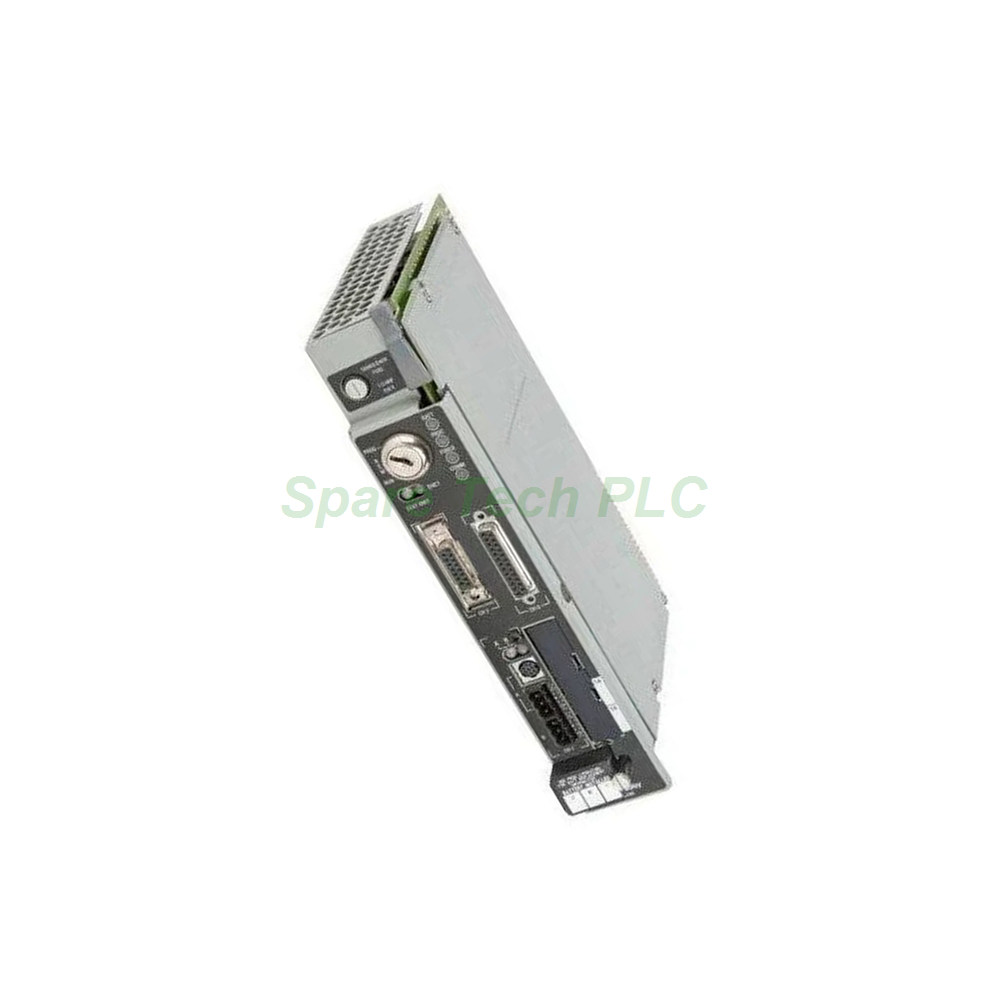
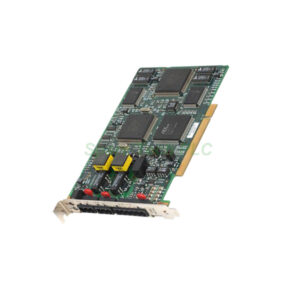
Allen-Bradley 1785-L40E PLC-5 Ethernet Processor
Product Introduction
The 1785-L40E processor stands as a versatile member of the Allen-Bradley PLC-5 family, specifically designed for medium to large-scale automation applications. This controller combines substantial memory capacity with a rich set of embedded communication interfaces, making it an excellent choice for complex machine control and process automation. Its most prominent feature is the integrated Ethernet communication port, which enables direct connectivity to plant-wide networks and supervisory systems.
Moreover, the 1785-L40E supports a wide array of industrial protocols and programming languages. It works seamlessly with various I/O platforms, including Bulletin 1771, 1794, 1746, and 1791 modules. The controller also complies with the IEC 61131-3 standard, offering programming flexibility through Ladder Logic, Sequential Function Chart (SFC), and Structured Text (ST). Consequently, this Allen-Bradley processor provides engineers with a powerful and adaptable solution for modern automation challenges.
Technical Specifications
Memory and I/O Capacity
The 1785-L40E provides a maximum user memory of 48K Words of battery-backed static RAM. For discrete I/O, it handles a total of 2048 points in any mix, or 2048 inputs and 2048 outputs in complementary mode. For analog applications, the controller supports up to 2048 analog I/O points. Users can expand memory backup options using modules such as the 1785-ME32, 1785-ME64, or the 1785-M100.
Communication Ports
This controller boasts an impressive array of embedded communication interfaces. It includes one (1) Ethernet port supporting 10/100 Mbps transmission speed for high-speed data exchange. Additionally, it features two (2) combo ports that can serve as Data Highway Plus (DH+) or Remote I/O (RIO) in either adapter or scanner mode. The controller also provides one (1) serial port configurable for RS-232, RS-422A, and RS-423 standards. These communication options allow the 1785-L40E to interface with visualization systems, other PLC-5 controllers, and a variety of other devices.
Processing Speed and Scan Time
The 1785-L40E delivers efficient program execution with rapid scan times. Remote I/O scan times vary based on baud rate: 10 ms at 57.6 kbits/s, 7 ms at 115.2 kbits/s, and 3 ms at 230.4 kbits/s. The controller also features a real-time clock with an accuracy variation of ±5 minutes per month.
Hardware and Addressing
The 1785-L40E mounts in the left-most slot of a 1771-A1B, -A2B, -A3B, -A3B1, or -A4B chassis. It offers three flexible hardware addressing modes: 2-slot mode (for 8-point and pairs of 16-point modules), 1-slot mode (for 8-point, 16-point, and pairs of 32-point modules), and half-slot mode (for any mix of 8-point, 16-point, and 32-point modules). This flexibility allows engineers to optimize chassis utilization for specific application requirements.
Chassis and I/O Support
The 1785-L40E supports up to 61 I/O chassis in total, with one local chassis and up to 60 universal remote chassis. It accommodates a maximum of 16 I/O racks (0 to 15) and supports 8-point, 16-point, 32-point, and 1771 intelligent I/O modules. The controller also includes a Control Coprocessor Expansion Port for future enhancements.
Power and Electrical Specifications
This Allen-Bradley processor draws approximately 3.3 Amps from the 5V DC backplane and dissipates 17.3W of power. Compatible power supplies include the 1771-P4S, -P6S, -P4S1, and -P6S1 models.
Mechanical and Environmental Parameters
The 1785-L40E withstands demanding industrial environments with ease. It operates reliably within a temperature range of 0 to 60°C (32 to 140°F) and tolerates relative humidity from 5% to 95% (non-condensing). For non-operating conditions, it withstands temperatures from –40 to 85°C (–40 to 185°F). The controller handles operational shock of 30G and operational vibration of 1G at 10 to 500 Hz. It carries CSA, C-TICK, CE, and UL certifications, ensuring compliance with international standards.
Installation and Mounting Guide
A qualified automation technician should perform the installation of the 1785-L40E. First, ensure the selected 1771 chassis is properly mounted, grounded, and powered off. Then, insert the processor into the left-most slot of the chassis, applying firm and even pressure to seat it correctly into the backplane connectors.
Next, configure the addressing switches (S1, S2, S3) to define the node address for DH+ and RIO networks. Afterward, connect the required communication cables to the appropriate ports. For Ethernet, use the RJ45 connector on the front face. Finally, apply power to the chassis and observe the status LEDs to confirm a successful initialization. Always handle the module with proper ESD precautions.
Packaging and Shipping Information
Each 1785-L40E processor comes in secure packaging to ensure safe transit. The package contains the processor module itself (with pre-installed 1770-XYC battery), along with a static-sensitive device warning label and a basic installation guide.
Shipping Methods:
All orders move through trusted global couriers for fast and reliable delivery.
Frequently Asked Questions (FAQ)
Q1: What is the maximum user memory of the 1785-L40E controller?
A: The 1785-L40E provides a maximum user memory of 48 Kilowords (48K Words) of battery-backed static RAM.
Q2: Does the 1785-L40E support Ethernet communication?
A: Yes, this Allen-Bradley PLC-5 processor features one (1) dedicated Ethernet port with 10/100 Mbps transmission speed for plant-wide networking.
Q3: What battery does the 1785-L40E use, and what backup options are available?
A: It comes with a 1770-XYC battery pre-installed. Users can also install optional backup memory modules such as the 1785-ME32, 1785-ME64, or 1785-M100.
Q4: How many I/O chassis can the 1785-L40E support?
A: This controller supports up to 61 I/O chassis in total, with one local chassis and up to 60 universal remote chassis.
Q5: What programming languages does the 1785-L40E support?
A: The 1785-L40E supports Ladder Logic, Sequential Function Chart (SFC), and Structured Text (ST) per IEC 61131-3 standards.