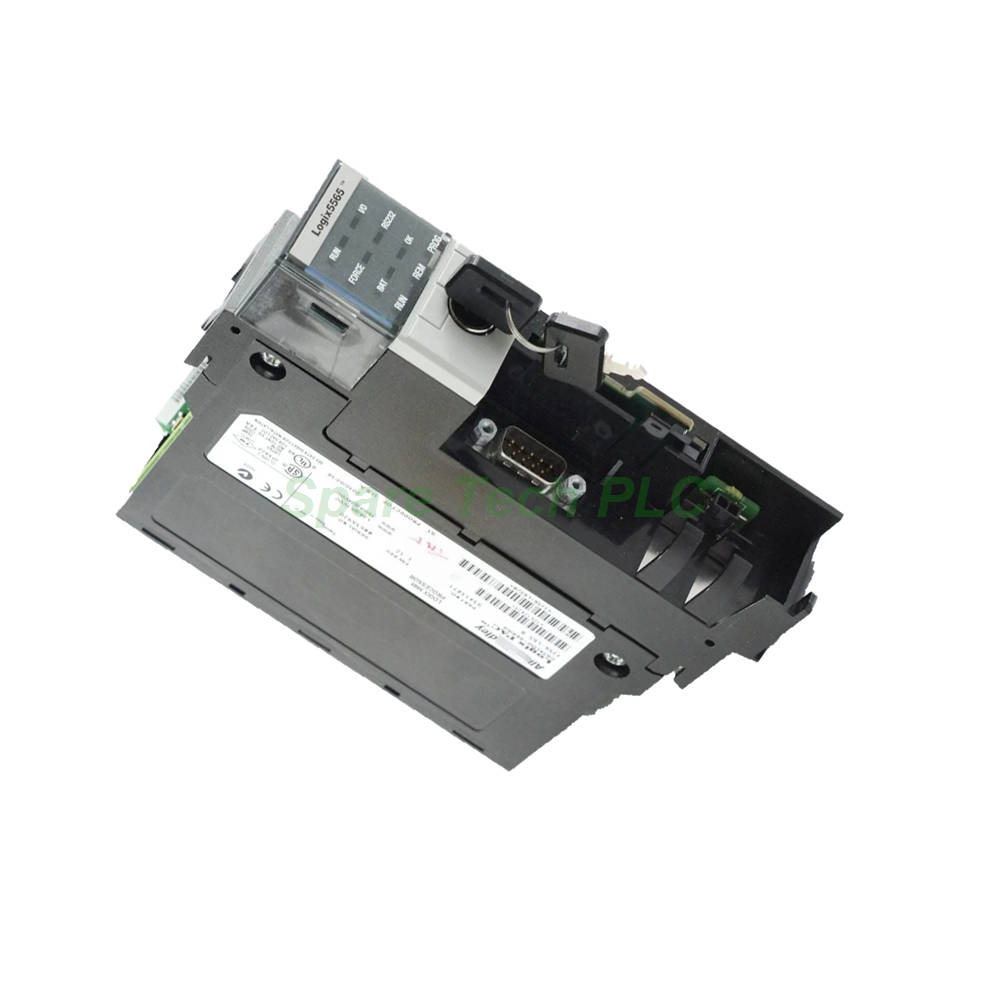
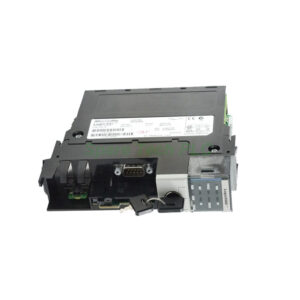
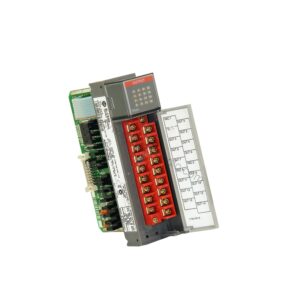
Allen-Bradley 1756-L61 ControlLogix Processor Module
Product Introduction
The Allen-Bradley 1756-L61 processor module is a core component of the ControlLogix automation system. It serves as the central processing unit for your control architecture. This module is designed to handle medium to large-scale applications efficiently. Furthermore, it offers a scalable solution that grows with your system's needs. The 1756-L61 controller supports a wide array of communication options. This ensures seamless integration into existing networks and with third-party devices. Specifically, its modular design allows users to tailor the system, potentially reducing overall project costs. The controller is well-suited for both standalone and distributed I/O applications. Moreover, its robust feature set provides reliable performance in demanding industrial environments.
Technical Specifications
The 1756-L61 controller comes equipped with a fixed user memory of 2 MB. Additionally, it has 478 KB of I/O memory dedicated to handling input and output data. For non-volatile storage, the module supports an optional 1784-CF128 CompactFlash memory card, providing up to 128 MB of backup storage capacity. This feature is crucial for retaining programs and critical data during power cycles. The controller supports a maximum digital I/O count of 128,000. It can also manage up to 4,000 analog I/O points, making it versatile for mixed-signal applications. The program scan time is a swift 0.08 milliseconds, ensuring fast and deterministic control. This controller handles up to 32 tasks simultaneously, with each task capable of running 100 programs. Furthermore, it supports 250 controller connections for extensive system networking.
Communication Capabilities
The 1756-L61 features a built-in RS-232 serial communication port. This port supports several protocols, including DF1 full/half-duplex, DF1 radio modem, DH-485, Modbus via logic, and ASCII. Besides the built-in port, the controller supports various optional communication modules. These include EtherNet/IP, ControlNet, DeviceNet, Data Highway Plus, SynchLink, and Remote I/O. Furthermore, it can interface with third-party process and device networks. This extensive connectivity ensures the 1756-L61 can be integrated into almost any industrial network architecture. For instance, using an Ethernet module enables motion control over EtherNet/IP. The controller also supports the embedded SERCOS interface for integrated motion solutions.
Mechanical and Environmental Parameters
The 1756-L61 controller has a backplane current draw of 1.2 Amps at 5 Volts DC. It also draws 14 mA at 24 Volts DC. The module dissipates 3.5 Watts of power, translating to 11.9 BTU/hr of thermal dissipation. It operates within a temperature range of 0 to 60 degrees Celsius (32 to 140 degrees Fahrenheit). For storage, it can withstand temperatures from -40 to 85 degrees Celsius. The controller operates reliably in environments with a relative humidity of 5 to 95% (non-condensing). It can endure vibrations of 2g at 10 to 500 Hz. Moreover, it has operating shock tolerance of 30g and non-operating shock tolerance of 50g. The controller weighs a lightweight 0.71 pounds (0.32 kilograms). The enclosure type is open-style, designed for installation within a protected control cabinet. Its continuous isolation voltage is rated at 30V, and it has been tested at 720V DC for 60 seconds.
Programming and Tasks
This processor supports multiple programming languages to suit various application needs. Supported languages include Relay Ladder, Structured Text, Function Block Diagram (FBD), and Sequential Function Chart (SFC). The controller can handle up to 32 tasks concurrently. Each task can contain up to 100 programs, allowing for structured and organized code. This flexibility helps in managing complex automation sequences efficiently. The 1756-L61 also supports event tasks with all event triggers available. This feature enables the system to respond immediately to specific external or internal events. The battery backup, using the 1756-BA1 or 1756-BATM battery, retains the user program and data when the main power is off. For Series B controllers, the appropriate battery is the 1756-BA2.
Installation Guidelines
The 1756-L61 processor module is a chassis-based unit. It can be installed in any available slot of the 1756 ControlLogix chassis. Compatible chassis models include the 1756-A4, 1756-A7, 1756-A10, 1756-A13, and 1756-A17. Begin by ensuring the chassis is properly mounted and grounded. Next, align the module with the card guides in the selected slot. Carefully slide the module into the chassis until it is firmly seated. Then, secure the module by closing the locking latch. The module is hot-swappable, but ensure proper system configuration and safety practices. Always verify that the power supply meets the backplane current requirements. The 1756-L61 uses a communication cable, such as the 1756-CP3 or 1747-CP3, for serial connection. These cables have a right-angle connector for the controller side and a straight connector for the serial port side, with a length of 3 meters (9.84 feet).
Packaging List
The standard packaging for the Allen-Bradley 1756-L61 processor module includes the following items:
One 1756-L61 ControlLogix processor module.
One battery for memory retention (1756-BA1 or 1756-BATM).
One product information sheet with installation notes.
Anti-static packaging to protect the module during transit.
Shipping documentation and packing slip.
Shipping and Delivery
All orders for the 1756-L61 processor module are shipped using premium express couriers. We ship exclusively via FedEx, UPS, and DHL to ensure fast and reliable delivery. Shipping options include express, standard, and economy services. Tracking information will be provided once the order is dispatched.
Frequently Asked Questions (FAQ)
1. Is the Allen-Bradley 1756-L61 controller still supported?
The 1756-L61 is listed as a discontinued/obsolete product by Rockwell Automation. However, it is still widely used and supported in many existing systems. Replacement units and spare parts are available through various industrial supply channels.
2. What type of battery does the 1756-L61 processor use?
The 1756-L61 controller uses either the 1756-BA1 or 1756-BATM battery for backup. For Series B variants, the 1756-BA2 battery is the correct replacement. Regular battery replacement is recommended to prevent program loss.
3. Can the 1756-L61 communicate using EtherNet/IP?
Yes, the 1756-L61 can communicate over EtherNet/IP. However, it requires an additional communication module, such as the 1756-ENBT or 1756-EN2T, to provide the physical Ethernet ports and network interface.
4. What is the maximum program capacity of the 1756-L61?
The 1756-L61 has a fixed user memory of 2 MB for logic and data storage. It can handle up to 32 tasks and 100 programs per task, providing ample capacity for most medium-scale control applications.
5. What chassis are compatible with the 1756-L61?
The 1756-L61 is compatible with all standard 1756 ControlLogix chassis. Specifically, the 1756-A4, 1756-A7, 1756-A10, 1756-A13, and 1756-A17 chassis are officially supported for this processor module.