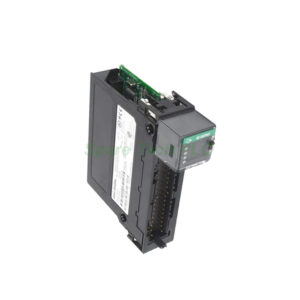
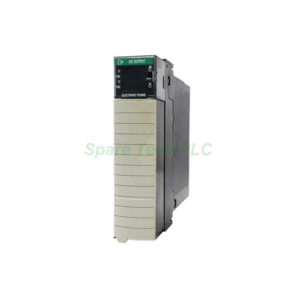
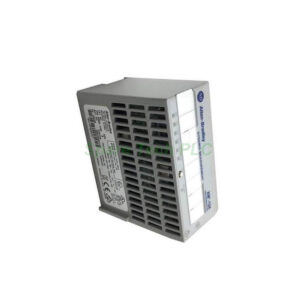
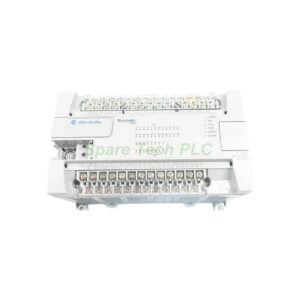
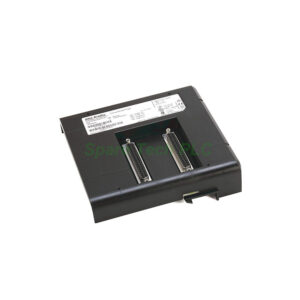
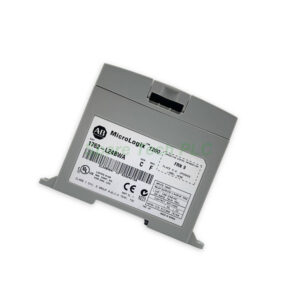
1756-IR12 ControlLogix RTD Input Module Overview
The Allen-Bradley 1756-IR12 is a high-resolution analog input module specifically designed for resistance temperature detector (RTD) sensors. This module belongs to the ControlLogix family and provides 12 non-isolated channels for 3-wire RTD connections. Its primary application is temperature sensing, but it also handles general-purpose resistance measurements. The module delivers 24-bit resolution, ensuring precise and stable readings across all channels. Furthermore, it supports multiple sensor types, including platinum, nickel, and copper RTDs, making it versatile for various industrial processes.
Technical Specifications and Performance
The 1756-IR12 module offers four selectable input ranges: 1 to 500 Ohms, 2 to 1000 Ohms, 4 to 2000 Ohms, and 8 to 4000 Ohms. This flexibility allows you to match the module to different RTD sensor specifications. The module automatically retains the last used range-sensor configuration, simplifying setup and reducing commissioning time.
This module draws 200 mA from the 5.1V DC backplane (210 mA for Series B) and 70 mA from the 24V DC supply. Its total backplane power is 2.7 W for Series A and 2.75 W for Series B. Maximum power dissipation reaches 2.7 W, with thermal dissipation of 9.2 BTU/hr. The 1756-IR12 also features overvoltage protection up to ±30V DC, safeguarding the module against accidental wiring faults.
Signal processing uses a Sigma-Delta conversion method, delivering high accuracy and noise rejection. The minimum module input scan time is 50 ms, and the module outputs data in IEEE 32-bit floating-point format. Additionally, the channel bandwidth depends on the notch filter configuration, allowing you to tune the module for specific noise environments. The module also includes detection features for under-range and over-range conditions, sensor offset compensation, and wire-off detection, enhancing system reliability.
Calibration and Sensor Support
Calibration of the 1756-IR12 can be performed in either RTD mode (Ohms) or thermocouple mode (millivolts), offering flexibility for different sensor types. In RTD mode, the module supports platinum (Pt385, Pt3916, Pt3920), nickel (Ni672, NiFe518), and copper (Cu426) sensors. This broad compatibility makes the module suitable for temperature monitoring in HVAC, chemical processing, and manufacturing applications. The module also supports software-configurable electronic keying and user-defined mechanical RTB keying, ensuring proper module identification and preventing incorrect installation.
Mechanical and Environmental Specifications
The 1756-IR12 operates within a temperature range of 0 to 60 °C (32 to 140 °F). It functions reliably in humidity conditions from 5% to 95% without condensation. The module carries a T4 temperature code rating for both IEC and North American standards, confirming its suitability for hazardous locations. Its continuous isolation voltage is 250V, with reinforced insulation type, providing robust protection between field wiring and the backplane. The open enclosure design requires installation within a proper industrial control panel.
Frequently Asked Questions (FAQ)
1. What sensors are compatible with the 1756-IR12 module?
The 1756-IR12 supports various RTD types, including platinum (Pt385, Pt3916, Pt3920), nickel (Ni672, NiFe518), and copper (Cu426) sensors. It also works with resistance-based devices within the selected Ohms ranges.
2. What is the difference between Series A and Series B versions of this module?
The Series B 1756-IR12 draws slightly more current from the 5.1V backplane (210 mA vs 200 mA) and has a marginally higher power rating (2.75 W vs 2.7 W). However, both versions offer identical functionality and performance for field applications.
3. Can I use the 1756-IR12 with 2-wire or 4-wire RTD sensors?
This module is specifically designed for 3-wire RTD connections. While 2-wire sensors may work with reduced accuracy, 4-wire sensors are not directly supported. For 4-wire applications, consider other modules in the ControlLogix analog input range.
4. Which terminal block does the 1756-IR12 require?
This module accepts either the 1756-TBCH (36-position screw-type) or the 1756-TBS6H (36-position spring-clamp) removable terminal blocks. Both provide reliable connections for field wiring.
5. How do I configure the input range for my RTD sensor?
You configure the input range and sensor type through the Studio 5000 Logix Designer software. Navigate to the module properties in the I/O configuration tree, select the appropriate range (1-500, 2-1000, 4-2000, or 8-4000 Ohms), and choose your specific sensor type from the drop-down menu.